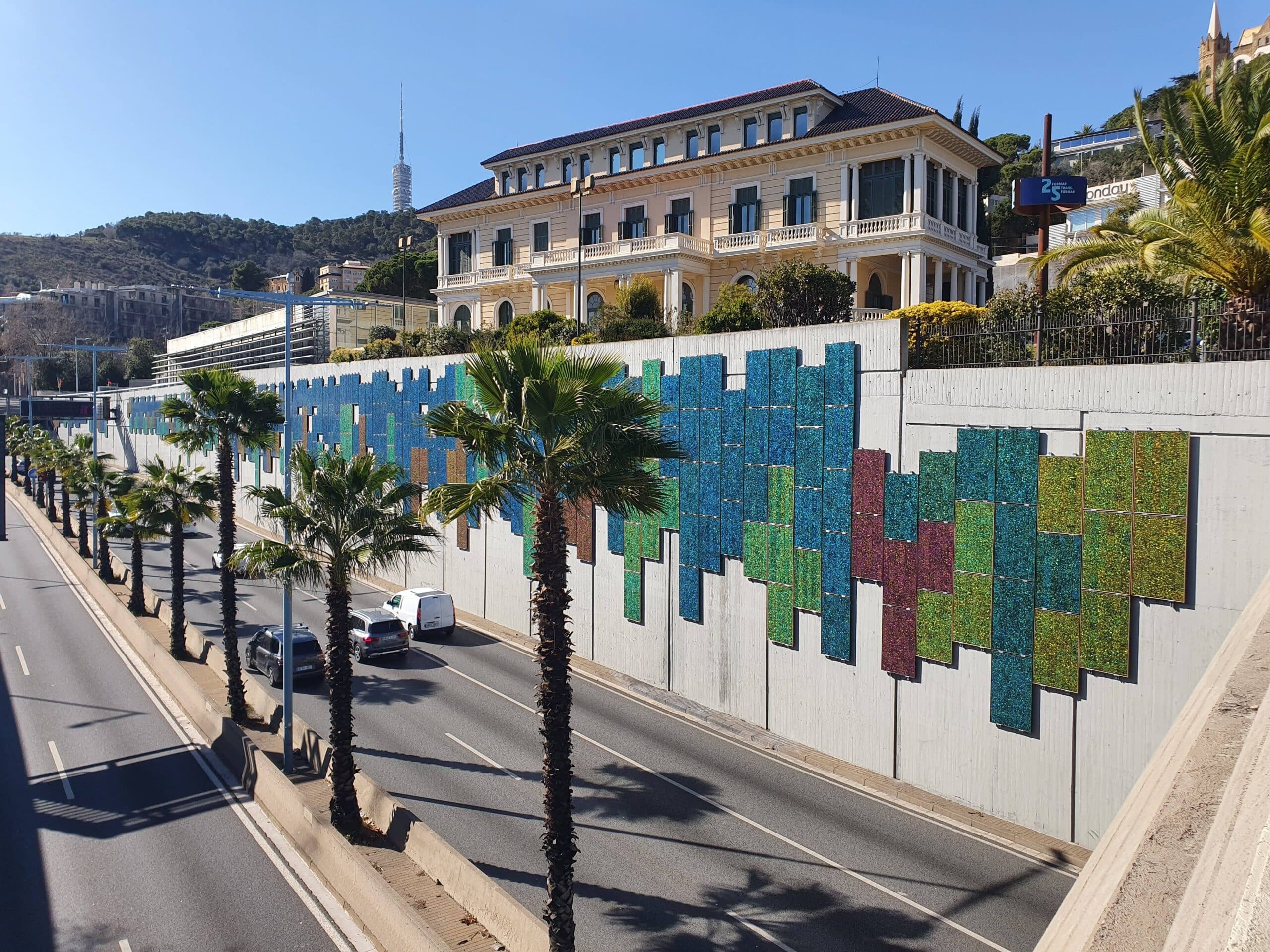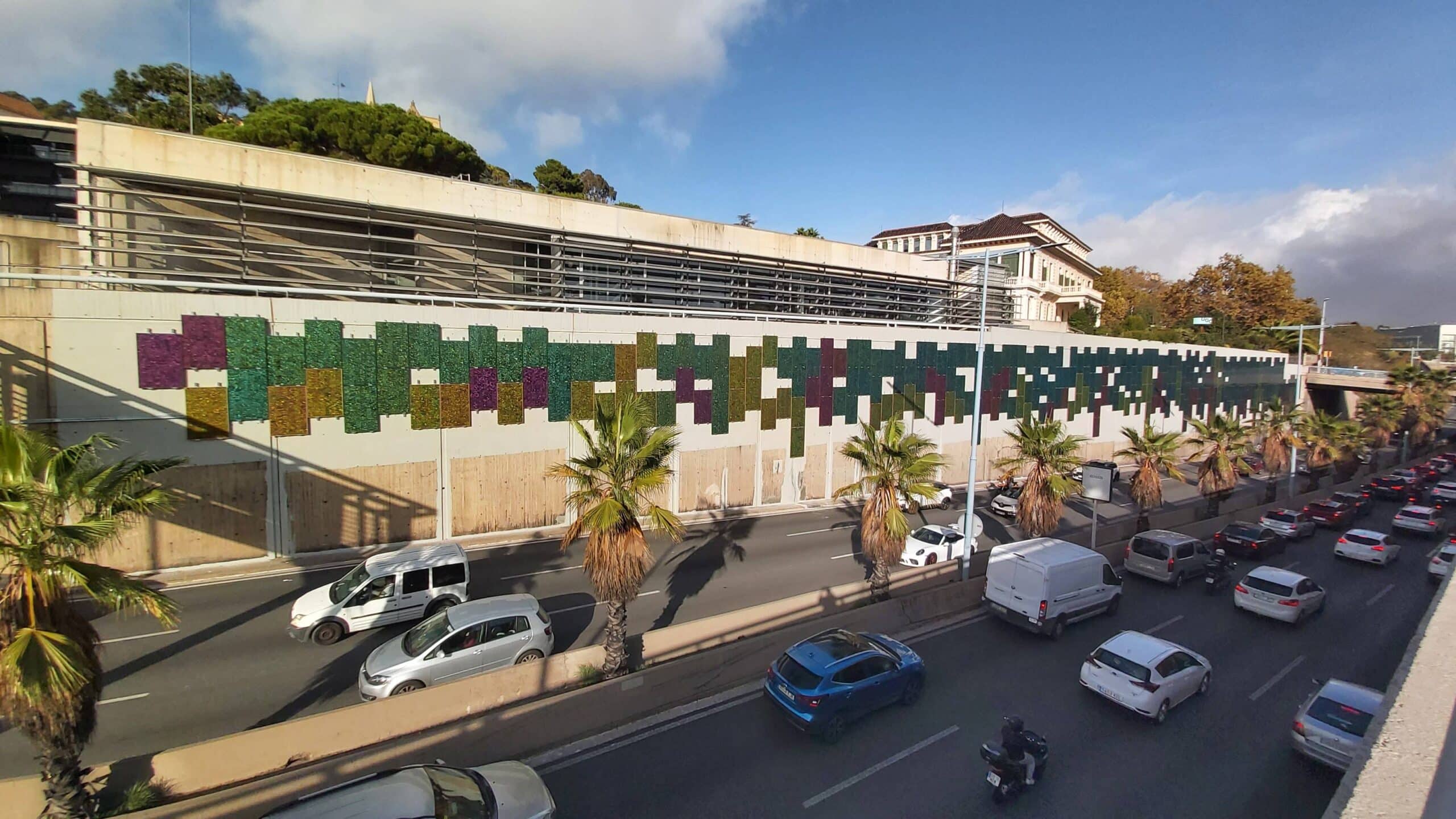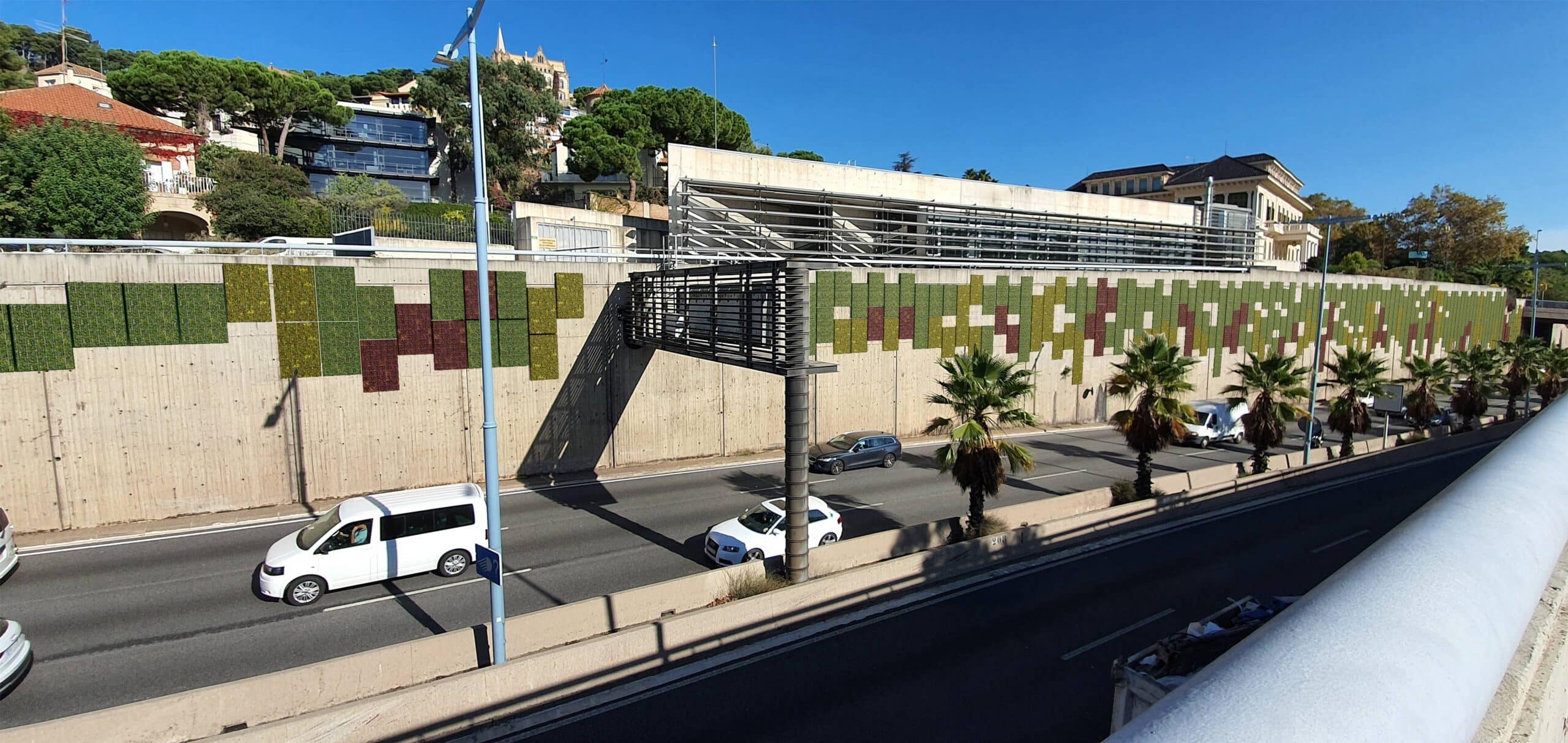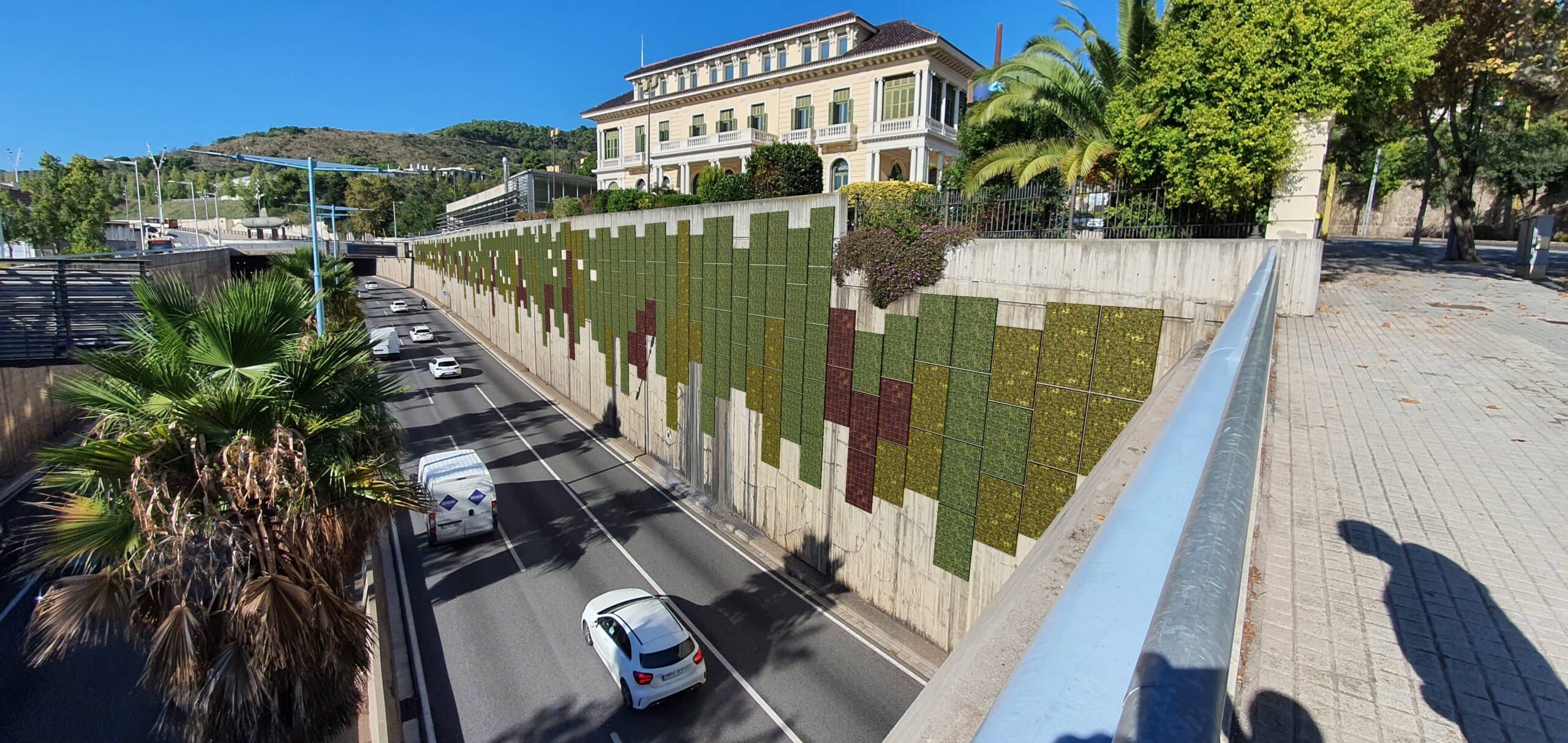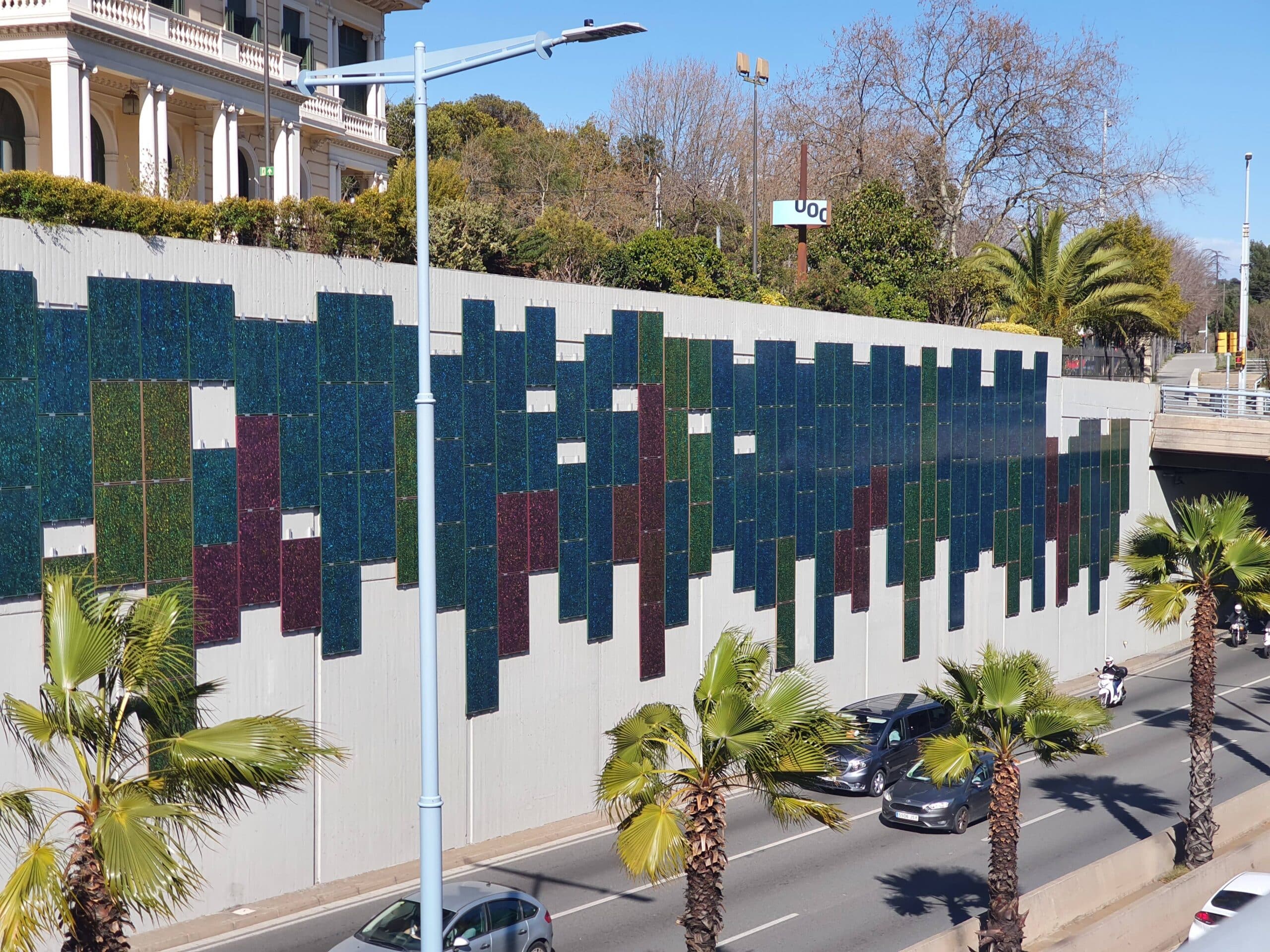
Barcelona’s Ronda de Dalt is advancing toward sustainability by integrating renewable energy generation infrastructure. CODI Studio was commissioned by the Barcelona City Council and TERSA to develop the executive project for a vertical photovoltaic solar plant integrated onto the retaining wall adjacent to the ring road, located between Carrer d’Adrià Margarit and Avinguda del Tibidabo. The project focused on transforming a vertical concrete wall into a self-consumption facility supplying clean energy to the ring road’s tunnel infrastructure and lighting.
The intervention involved installing 368 high-efficiency polycrystalline photovoltaic modules, achieving a total capacity of 93.84 kWp and a nominal power of 90 kW. Aesthetically, the proposal was designed as a large vertical artistic mosaic: panels in green, gold, and purple hues were arranged in irregular bands evoking the morphology of a climbing plant colonizing the wall. The installation was secured to the concrete using aluminum profiles and clamps, with the wiring routed discreetly to an outdoor inverter connected directly to the roadway structure’s technical room.
At CODI Studio, we aimed to design a solution that combines energy efficiency engineering with urban landscape integration, adding high aesthetic and environmental value to one of Barcelona’s busiest thoroughfares.
Sustainability
The project combines renewable energy generation with urban design. The self-consumption facility makes use of an existing wall, while its 368 photovoltaic modules are integrated as an architectural mosaic, an unusual approach for this type of infrastructure. The solution optimizes an existing support, avoids occupying new land and adds landscape value to an energy installation that serves the city.